










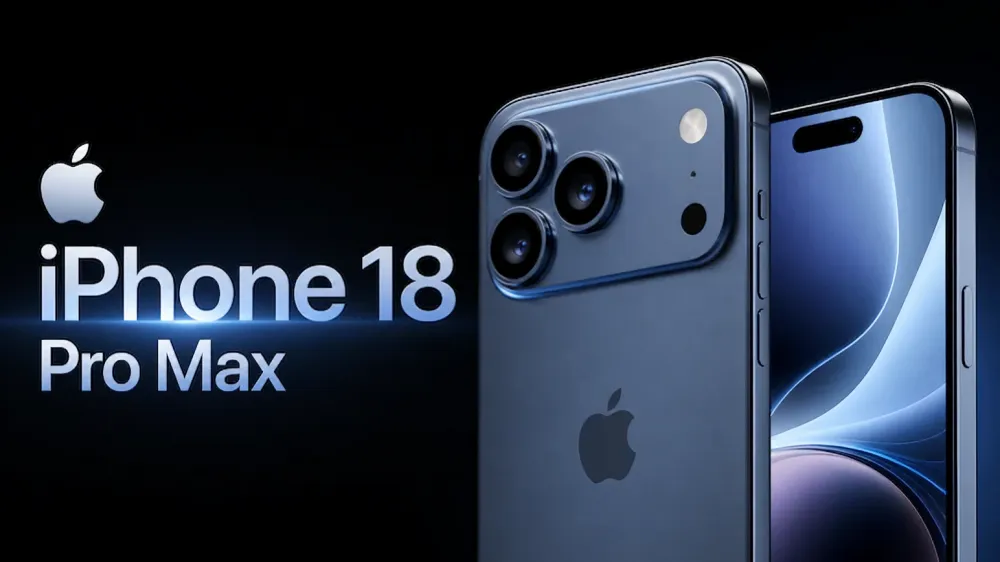
iPhone 18 Pro Max Review: Release Date, Price, Specs & Biggest Leaks (2026 Guide)

Image 60

iPhone 18 Pro Max: Release Date, Price & Specs Guide

iPhone 18 Pro Max: Release Date, Price, Specs & Biggest Leaks (2026 Guide)

Apple’s iPhone 18 Pro Max is shaping up to be a major generational update, according to multiple reliable industry sources. Reported advances include under-display Face ID, a next‑generation A20 Pro chip manufactured on a 2nm process, and a camera system that introduces variable aperture to the iPhone line.

Current leaks and supplier reports point to one of Apple’s largest upgrade cycles in years. Analysts highlight a variable aperture lens, a smaller Dynamic Island, and expanded on‑device AI features that together suggest a significant step forward for the pro models.

Whether you use an iPhone daily or are comparing flagship phones for 2026, this guide collects the latest reliable information on release timing, price expectations, core specifications, and the features most likely to matter to buyers.

Quick Summary: iPhone 18 Pro Max at a Glance

  • Expected announcement window: Early September 2026, with retail availability mid‑September (industry estimates)
  • Estimated starting price: $1,299 for the 256GB base model (analyst consensus)
  • Headline features: A20 Pro chip (2nm), under‑display Face ID, variable aperture main camera, smaller Dynamic Island
  • Display: Reported 6.9‑inch LTPO OLED with ProMotion (adaptive 1–120Hz)
  • Camera system: 48MP main (variable aperture), 48MP ultra‑wide, 12MP periscope telephoto with ~10x optical zoom
  • Battery: Reported ~4,800mAh capacity with faster charging support
  • Finishes: Dark Cherry (new), Space Black, Titanium Silver, Natural Titanium
  • Software: Ships with iOS 20 featuring expanded Apple Intelligence and on‑device AI

Bookmark this guide for updates as new confirmations arrive, and use the comparison links below to weigh the iPhone 18 Pro Max against previous pro models and rival flagships.

iPhone 18 Pro Max Release Date: When Can You Buy It?

Apple has long followed a September launch cadence for its flagship phones, and current industry reporting indicates the iPhone 18 Pro Max will likely follow that pattern. Below we summarize the timeline that analysts and reliable supply‑chain sources are pointing to, while noting where dates remain estimates.

Expected Announcement and Launch Timeline

Historically, Apple announces new iPhone pro models in the first half of September, with pre‑orders opening the following Friday and general availability about a week after that. Based on multiple analyst forecasts, you can reasonably expect:

an apple store with a tree in front of it

Announcement window

Expect Apple’s fall keynote in early September 2026 (first or second week). Several reputable outlets list early‑to‑mid September as the likely announcement period; treat specific calendar dates as provisional until Apple confirms.

The event will present the full iPhone 18 family, with emphasis on the pro models and their new hardware and software features. Apple typically livestreams the keynote worldwide.

Pre‑orders and retail availability

Following Apple’s usual cadence, pre‑orders commonly begin the Friday after the announcement. If Apple follows past behavior, pre‑orders could start the Friday after the keynote, with shipments and in‑store availability roughly seven days later. Exact times (PDT/EDT) vary by region and will be confirmed on announcement day.

Remember: these timings come from analyst projections and historical patterning—final dates and times are announced by Apple on keynote day.

Potential Split‑Launch Strategy

Some supply‑chain reports suggest Apple may stagger availability across the lineup to manage component constraints, especially for high‑demand pro models. Possible scenarios include:

  • Standard iPhone 18 models becoming widely available first, with pro models following 1–3 weeks later
  • Prioritizing certain storage configurations or colors to smooth initial supply
  • Staggered regional rollouts to balance logistics and carrier partnerships

That said, many analysts still expect Apple to aim for simultaneous availability of all models where feasible—Apple’s preference historically has been to maximize launch momentum by keeping the lineup synchronized.

Regional Availability

Initial launch regions typically include the United States, Canada, United Kingdom, major EU markets, Australia, Japan, and China, with additional countries added in phased waves over subsequent weeks. Local pricing, taxes, and carrier promotions will vary by market.

world map chart

Insider tip: Popular finishes and higher‑capacity models often sell out quickly at launch. To improve your chances of getting the configuration you want, prepare payment and trade‑in details in the Apple Store app, set calendar reminders for the pre‑order window, and consider multiple devices/accounts for simultaneous ordering.

What to do before launch

  • Enable two‑factor authentication on your Apple ID and verify payment methods in the Apple Store app.
  • Estimate trade‑in value in advance—trading in a recent iPhone pro model can substantially reduce your out‑of‑pocket cost.
  • Check carrier upgrade offers and eligibility; some promotions appear alongside pre‑orders.
  • Bookmark this guide or subscribe to launch alerts to get confirmation of announcement and pre‑order details the moment Apple publishes them.

If you’d like, we can send a quick pre‑order checklist or set up launch reminders for your time zone—let me know which option you prefer.

iPhone 18 Pro Max Price: How Much Will It Cost?

The expected iPhone 18 Pro Max price reflects the device’s positioning as Apple’s top‑tier flagship. Analyst estimates and supply‑chain reports indicate a higher entry price than recent generations, driven by premium materials and several new technologies.

Base Price Predictions

Industry consensus currently points to a roughly $100 increase versus the previous generation, tied to expensive new components such as the A20 Pro chip (2nm), a mechanical variable aperture camera, and under‑display Face ID. As of the latest reports, the projected starting price for the 256GB model is approximately $1,299 (estimated).

fan of 100 U.S. dollar banknotes
Storage Capacity Expected Price (USD) Price Increase vs iPhone 17 Pro Max Best For
256GB $1,299 (estimated) +~$100 (estimated) Cloud‑first users, typical pro buyers
512GB $1,499 (estimated) +~$100 (estimated) Photography enthusiasts, moderate video creators
1TB $1,799 (estimated) +~$100 (estimated) Content pros, heavy local storage users
2TB $2,099 (estimated) New tier (estimated) Professional videographers, extreme storage needs

Comparison with Previous Pro Max Generations

Price has gradually risen across recent pro max releases as Apple adds premium materials and advanced components. The projected increase for the iPhone 18 Pro Max is presented here as an estimate to help you budget and compare upgrade value.

iPhone 15 Pro Max (2023)

Launched at $1,199 for 256GB and introduced a titanium frame and the A17 Pro chip.

  • 256GB: $1,199
  • 512GB: $1,399
  • 1TB: $1,599

iPhone 16 Pro Max (2024)

Kept pricing similar while adding camera and chipset refinements.

  • 256GB: $1,199
  • 512GB: $1,399
  • 1TB: $1,599

iPhone 17 Pro Max (2025)

Maintained the $1,199 entry price with iterative improvements.

  • 256GB: $1,199
  • 512GB: $1,399
  • 1TB: $1,699

iPhone 18 Pro Max (2026)

Projected to start higher to account for the 2nm A20 Pro chip, variable aperture camera, and under‑display Face ID—figures shown are estimates pending official pricing.

  • 256GB: $1,299 (estimated)
  • 512GB: $1,499 (estimated)
  • 1TB: $1,799 (estimated)
  • 2TB: $2,099 (estimated)

Regional Pricing Variations

Expect local prices to vary based on taxes, import duties, and currency fluctuations. European prices will typically include VAT, and carrier subsidies or bundles will alter effective out‑of‑pocket costs in many markets.

a button with the american flag on it sitting on top of a hundred dollar bill

Price alert: Carrier promotions and trade‑in programs can materially reduce what you pay. Early launch trade‑in credits for recent iPhone pro models have historically ranged widely—some carriers promote credits up to $800–$1,000 on qualifying trades, which can cut effective launch cost substantially (actual credits vary by carrier and condition).

How to budget: a simple example

Example (illustrative): If the 256GB iPhone 18 Pro Max lists at $1,299 and your eligible iPhone 17 Pro Max trade‑in credit is $850 through Apple or a carrier offer, your net cost would be about $449 before taxes and any carrier financing or promos. Always check multiple trade‑in and carrier options to maximize value.

Next steps

Treat these numbers as estimates until Apple announces official pricing. If you want, we can:

  • Compare configurations to identify the best value for your needs (storage vs cost).
  • Estimate trade‑in value for your current device and show likely out‑of‑pocket scenarios.
  • Monitor carrier promotions and alert you when attractive deals appear post‑launch.

Design & Display Leaks: What Will the iPhone 18 Pro Max Look Like?

Leaked engineering renders and supply‑chain reports indicate the iPhone 18 Pro Max will mark a clear evolution in Apple’s design language for the pro models. Sources point to refined titanium construction, reduced front‑facing bezels, and front‑end changes that prioritize a larger, more immersive screen while retaining the premium feel iPhone users expect.

Revolutionary Under-Display Face ID

One of the most discussed changes is under‑display Face ID. Multiple reliable leakers report Apple has moved the Face ID sensor array beneath the display, allowing for a cleaner front surface and increased usable screen area. These reports describe a transparent micro‑lens array that permits infrared light to reach the sensors under the panel.

graphical user interface, application

Benefits of under‑display Face ID

  • More uninterrupted screen area for apps, videos, and games
  • Simpler, more symmetrical front appearance when the screen is off
  • Maintains Face ID security while enabling sleeker aesthetics
  • Improved edge‑to‑edge content immersion for full‑screen experiences

Technical considerations and confidence

Under‑display biometric systems require precise calibration to maintain speed and accuracy through display layers. According to supply‑chain insiders and display analysts, Apple has worked through earlier light‑transmission challenges, and early prototypes reportedly perform well across varied lighting conditions. That said, until Apple confirms, treat performance claims as strong leak consensus rather than official specs.

Smaller Dynamic Island

Reports also indicate a noticeably smaller Dynamic Island. By packaging front sensors and camera modules more tightly beneath the display and reducing inactive bezel areas, Apple appears to have reduced the Dynamic Island area by roughly 25–35% in leaked device drawings.

silver iphone 6 on black ipad

Practical impact: a smaller Dynamic Island means less screen obstruction when watching video or gaming, giving you a few extra millimeters of visible content and a cleaner notification area—small but noticeable for users who value maximum screen real estate.

Premium Titanium Frame Evolution

The iPhone 18 Pro Max is reported to continue Apple’s use of aerospace‑grade titanium for the frame, with supplier leaks describing refinements to the alloy and surface finish. These changes are intended to improve scratch resistance and reduce fingerprints while preserving the material’s distinctive premium feel.

Frame improvements (reported)

  • New titanium alloy composition for improved strength and finish
  • Advanced coating to resist scratches and reduce visible smudges
  • Enhanced antenna integration to improve signal performance

Weight and feel

  • Leaked CAD estimates suggest a modest weight reduction vs. iPhone 17 Pro Max
  • Refined balance and edge geometry for a more comfortable one‑hand grip
  • Reduced camera bump prominence through internal layout changes

Durability and build quality

  • Tighter component tolerances for a more seamless fit
  • Improved water resistance and drop protection reported by suppliers
  • Premium tactile feedback from refined button and frame finishes

New Dark Cherry Color Option

Leaked photos and manufacturing orders point to a new Dark Cherry finish exclusive to the pro models. The deep burgundy shade with subtle metallic flakes is positioned as a distinctive alternative to Space Black and titanium silver options.

iPhone 18 Pro Max in new Dark Cherry color showing titanium finish

    Available colors (reported)

  • Dark Cherry (new, pro exclusive)
  • Space Black (darker than previous)
  • Titanium Silver (polished finish)
  • Natural Titanium (brushed appearance)

Display Technology Advancements

On the display side, leaks describe a larger 6.9‑inch LTPO OLED panel with significantly reduced bezels and higher peak brightness. The screen reportedly uses a fourth‑generation LTPO stack to improve power efficiency and enable adaptive refresh rates from 1Hz to 120Hz for a balance of smoothness and battery life.

iPhone 18 Pro Max LTPO OLED display showing ProMotion technology and color accuracy
Display Specification iPhone 18 Pro Max iPhone 17 Pro Max Improvement
Size 6.9 inches (reported) 6.7 inches +0.2 inches
Technology LTPO OLED (4th‑gen, reported) LTPO OLED Better efficiency
Refresh Rate 1–120Hz adaptive 1–120Hz adaptive Improved power management
Peak Brightness ~2,500 nits (reported) 2,000 nits Higher outdoor visibility
Resolution 2868 x 1320 (reported) 2796 x 1290 Increased pixel density
Screen‑to‑Body Ratio ~93.2% (reported) 89.8% More usable screen

In short, the display improvements emphasize a larger usable screen and better outdoor visibility while using adaptive refresh to conserve battery. As with other leaks, treat numeric display figures as reported numbers pending official confirmation.

Compare Design Features

Want to see how the iPhone 18 Pro Max design stacks up against previous generations and competitors?

Performance & A20 Pro Chip: Revolutionary Power and Efficiency

According to multiple supply‑chain reports and analyst notes, the iPhone 18 Pro Max will ship with Apple’s A20 Pro — a next‑generation system‑on‑chip built on an advanced 2nm process. Early estimates suggest substantial gains in raw performance, power efficiency, and on‑device AI capability compared with prior pro models.

2nm Chip Technology Breakthrough

Moving to a 2nm manufacturing node allows Apple and its foundry partners to increase transistor density and improve energy efficiency. Industry analysts report the A20 Pro carries a notable transistor count uplift versus the prior generation, which translates into stronger single‑thread and multi‑thread performance for real apps and pro workflows.

black iphone 7 with white and black dice

Manufacturing and architectural advantages (reported)

Analyst estimates indicate the A20 Pro benefits from transistor density and efficiency improvements, which should materially improve sustained performance and battery life for pro users.

  • Higher transistor density enabling faster CPU workloads
  • Expanded GPU resources for graphics and compute tasks
  • Improved energy efficiency that reduces steady‑state power draw
  • Refined thermal behavior to sustain peak performance longer

Real‑world impact for users

These architectural improvements mean everyday tasks feel snappier: apps launch faster, background tasks are less disruptive, and pro workflows such as video editing or multi‑app productivity complete more quickly. For power users, the A20 Pro should deliver a noticeably smoother experience when juggling demanding apps and services.

AI Performance Revolution

Apple has reportedly upgraded the Neural Engine in the A20 Pro to accelerate on‑device AI workloads. Multiple sources suggest the new neural subsystem significantly increases inferencing throughput compared with the previous generation, enabling richer, private AI features without sending data to the cloud.

iPhone 18 Pro Max running AI-powered features and machine learning applications

Expected user-facing AI improvements include:

  • Real‑time photo and video enhancement: on‑device scene analysis and automatic adjustments before you shoot
  • Smarter typing and text suggestions: predictive text and context‑aware autocorrect tuned to your writing patterns
  • Robust voice processing: improved on‑device speech recognition in noisy environments
  • Faster computational photography: multi‑frame fusion and advanced noise reduction completed more quickly
  • Background AI tasks: indexing and photo organization executed without noticeable battery impact

Gaming and Thermal Performance

The A20 Pro’s GPU enhancements aim to push mobile gaming on pro devices further. Reported improvements focus on higher sustained frame rates and advanced rendering features that were previously limited to desktops and consoles.

Graphics capabilities (anticipated)

  • Hardware‑accelerated effects for more realistic lighting
  • Efficient upscaling to deliver higher perceived resolution
  • Consistent frame‑rates in demanding titles with pro settings
  • Support for current and emerging graphics APIs

Thermal management

  • Improved internal cooling and heat distribution for sustained workloads
  • Intelligent performance scaling to balance power and temperature
  • Lower surface temperatures under prolonged load, according to supplier notes

Real‑world gaming

  • Longer play sessions with reduced throttling
  • Smoother frame pacing in competitive titles
  • Better battery retention during graphics‑intensive use
iPhone 18 Pro Max gaming performance showing console-quality graphics

Battery Efficiency Improvements

Combined with a more efficient 2nm node and system‑level power management, the A20 Pro is expected to reduce power consumption for routine tasks. That makes for longer real‑world battery life even as the display and camera systems become more capable.

9.6
Overall Performance Score (projected)
CPU Performance
9.8/10
GPU Performance
9.6/10
AI/Neural Engine
9.9/10
Power Efficiency
9.5/10
Thermal Management
9.2/10

What this means for you: expect all‑day battery life for mixed use in many scenarios, and better endurance during sustained tasks such as video editing or extended gaming sessions. As always, real‑world results will vary by usage patterns and settings.

“The A20 Pro represents a meaningful generational step for mobile silicon — increased efficiency and stronger AI throughput let Apple move more intelligence on‑device without compromising battery life.”

— Industry analyst (summarized)

Note: Performance figures and neural engine throughput referenced here reflect analyst and leak estimates. We will update this section with verified benchmarks as independent testing becomes available after launch.

Camera Upgrades: iPhone 18 Pro Max — A Leading Camera Phone for 2026

Leaked hardware details and analyst reports position the iPhone 18 Pro Max as one of 2026’s most capable camera phones. The headline change is a mechanical variable aperture on the main lens, paired with a new periscope telephoto and advanced on‑device AI. Together, these upgrades aim to deliver greater creative control, improved low‑light performance, and pro‑grade video features for photographers and content creators.

Revolutionary Variable Aperture Lens (reported)

According to multiple supply‑chain sources, the main wide camera introduces a physical variable aperture that can adjust between roughly f/1.4 and f/2.8. That mechanical iris gives the iPhone new control over depth of field and light gathering—capabilities traditionally found on dedicated cameras.

iPhone 18 Pro Max variable aperture camera lens mechanism close-up

How the variable aperture works

The system reportedly uses a miniature mechanical iris inside the main lens assembly. In practice:

  • f/1.4 opens wide for low‑light shots and stronger background blur (bokeh)
  • f/2.8 narrows the aperture for scenes that require greater depth and overall sharpness
  • Automatic scene analysis adjusts aperture in real time; manual control appears available in a Pro camera mode

Practical photography benefits

Variable aperture gives photographers more creative latitude on iPhone: true subject separation in portraits, improved shadow detail in low light, and better control over motion blur without relying solely on computational effects.

Enhanced Zoom: Periscope Telephoto

Reports indicate the iPhone 18 Pro Max includes a periscope telephoto lens delivering approximately 10x optical zoom—an upgrade over prior pro models. This extends the phone’s reach for wildlife, sports, and distant subjects while retaining optical quality rather than relying on heavy digital cropping.

Man filming with camera on phone screen live now
Camera Sensor Size Resolution Aperture Special Features
Main Wide 1/1.14″ (reported) 48MP f/1.4–2.8 variable (reported) Sensor‑shift OIS, variable aperture, pixel binning
Ultra Wide 1/2.3″ (reported) 48MP f/2.2 Autofocus, macro capability, improved edge sharpness
Periscope Telephoto 1/2.8″ (reported) 12MP f/2.8 ~10x optical zoom, OIS, tetraprism design

Night Photography Improvements

Low‑light shooting benefits from the combination of a larger main sensor, wider maximum aperture, and more powerful computational photography driven by the A20 Pro neural engine. The updated Night mode reportedly aligns multiple frames faster and with better detail preservation.

iPhone 18 Pro Max night mode photography sample showing exceptional low-light performance

Hardware gains

  • Larger sensor area for improved light collection
  • Variable aperture opening to f/1.4 for maximum light
  • Improved sensor‑shift stabilization to reduce blur
  • Upgraded lens coatings to minimize flare

Software processing

  • Advanced multi‑frame fusion and alignment
  • AI‑driven noise reduction and highlight recovery
  • More accurate color rendition in mixed lighting

Real‑world results

  • Cleaner handheld long exposures, often without a tripod
  • Better night portraits with natural skin tones
  • Improved astrophotography and low‑light landscape captures

Video Recording and Pro‑Grade Features

Video capabilities appear focused on professional workflows. Reported features include 8K recording at 30fps, 4K at 120fps for slow motion, and ProRes support with the ability to offload large files to external SSDs via USB‑C. A Log profile and improved stabilization make the device attractive to creators who need high‑quality footage on the go.

Professional videographer using iPhone 18 Pro Max for cinematic video recording

    Video specifications (reported)

  • 8K at 30fps with HDR
  • 4K at 120fps for high‑quality slow motion
  • ProRes recording to external SSDs (via USB‑C)
  • Log profile for color grading
  • Enhanced cinematic mode with improved depth mapping
  • Real‑time neural‑engine video effects

    Stabilization

  • Sensor‑shift stabilization across primary cameras
  • Action mode enhancements with better cropping algorithms
  • Combined optical + electronic stabilization for gimbal‑like smoothness
  • Effective stabilization across zoom ranges

AI Photography and Camera Controls

The A20 Pro neural engine enables advanced AI features that enhance shots without user intervention. In addition, the camera control button gains improved functionality—reports describe pressure‑sensitive operation that locks focus and exposure on a light press and triggers shutter on harder press, offering faster one‑handed control for many users.

black DSLR camera floating over man's hand at the woods

Camera system strengths

  • Variable aperture for DSLR‑like control over depth and bokeh
  • ~10x optical periscope zoom extends photographic reach
  • Low‑light improvements that close the gap with dedicated cameras
  • Pro‑grade video features such as ProRes and Log profiles
  • AI processing that enhances images without overtly altering intent
  • Improved camera control button for easier one‑hand operation

Potential limitations

  • Mechanical aperture introduces moving parts—long‑term reliability will be important to monitor
  • 8K and ProRes files consume large amounts of storage—consider higher capacity models or external storage workflows
  • 10x optical zoom is excellent for a phone but still behind some dedicated superzoom cameras
  • Extensive computational processing can introduce slight shutter latency in certain modes
  • Camera module size remains notable despite engineering efforts

“The variable aperture is a meaningful step for mobile photography—combined with computational processing, it gives pro photographers and advanced users a flexible toolset in a pocketable device.”

— Professional photographer (paraphrased)

Note: Camera specifications and features above are based on leak consensus and supplier reporting. Treat numeric figures and exact operational details as reported until Apple confirms them at the official announcement or independent testing is available.

Battery & Charging: All-Day Power and Faster Charging

Leak reports and analyst commentary indicate Apple has prioritized battery improvements for the iPhone 18 Pro Max through a mix of larger capacity cells, more efficient internal component layout, and smarter power management. Together these changes aim to deliver noticeably better battery life for typical and heavy users alike.

Larger Battery Capacity

Supply‑chain sources currently report a battery capacity around 4,800mAh for the iPhone 18 Pro Max — an increase over the previous generation. Apple’s ability to fit a larger cell is likely driven by component consolidation and updated battery chemistry that improve energy density without compromising safety.

a woman's arm holding a cell phone and a charger attached to it

Battery technology (reported)

Reports suggest Apple is using improved cell chemistry and packaging that increase energy density and cycle life.

  • Higher energy density for more capacity in the same footprint
  • Improved cycle life to retain health longer
  • Better thermal characteristics to reduce overheating risk
  • Faster charge acceptance for improved practical charging times

Expected battery life (real‑world)

Analyst estimates, combining the larger battery and the A20 Pro’s efficiency, suggest the iPhone 18 Pro Max should deliver meaningfully longer runtime than its predecessor. Typical expectations include up to ~16 hours of active screen time in mixed usage and up to ~28 hours of video playback in controlled tests—figures that represent reported improvements rather than lab‑certified results.

Faster Charging Capabilities

Charging is another area of reported improvement. Multiple credible sources indicate support for faster wired charging via USB‑C. Published leak figures suggest a maximum wired rate near 45W, which would represent a notable increase over previous pro max models.

a book opened to a picture of two iphones
Charging Method Power Output 0–50% Charge Time (reported) 0–100% Charge Time (reported)
45W USB‑C Fast Charging 45W (reported) ~18 minutes (reported) ~65 minutes (reported)
30W USB‑C (previous gen) 30W ~28 minutes ~95 minutes
MagSafe Wireless 25W (reported) ~35 minutes (reported) ~120 minutes (reported)
Standard Qi Wireless 15W ~55 minutes ~180 minutes

MagSafe and wireless charging

MagSafe reportedly gets a bump in alignment strength and charging speed to around 25W, improving convenience and reducing charge times compared with older wireless rates. Compatibility with existing MagSafe accessories appears intact, though to reach the fastest wireless speeds you may need a newer MagSafe charger designed for the increased output.

an iphone is sitting on a wooden table

MagSafe features (reported)

  • Stronger magnets for better alignment
  • Up to ~25W MagSafe charging with compatible chargers
  • Full compatibility with the existing MagSafe accessory ecosystem

Charging efficiency

  • Reduced heat generation during charging
  • Intelligent charging algorithms to preserve battery health
  • Adaptive charging behavior that learns your schedule

Battery management

  • Optimized Battery Charging to delay full charges when appropriate
  • Battery health monitoring with usage recommendations
  • Cleaner energy charging options where available

Real‑world battery expectations and practical tips

Reported improvements point to reliable all‑day battery life for most users, even with demanding activities such as video recording and gaming. Heavy users should still expect to monitor intensive features (like 8K recording or prolonged gaming) which can shorten runtime.

  • Practical tip: Enable Optimized Battery Charging and Background App Refresh management to extend multi‑year battery health.
  • Practical tip: Use a high‑watt USB‑C charger if you want the fastest wired charging experience; confirm your cable and charger support the faster profile.
  • Practical tip: Consider higher storage configurations or external SSD workflows if you plan to shoot a lot of 8K/ProRes video, since large files can affect how often you must charge.
9.4
Overall Battery Score (projected)
Daily usage
9.6/10
Heavy usage endurance
9.2/10
Charging speed
9.4/10

Note: All battery capacities, charging rates, and timing estimates in this section are based on leak reports and analyst estimates. We will update with verified test results and official Apple specifications as they become available.

Software & iOS 20 Features: Intelligence Meets Innovation

The iPhone 18 Pro Max is expected to ship with iOS 20, a release that pushes Apple’s on‑device intelligence further into the core experience. iOS 20 emphasizes local AI processing, privacy controls, and refinements to the interface that make everyday tasks faster and more intuitive on pro models.

iOS 20 core improvements (what you’ll notice first)

iOS 20 builds on familiar iPhone workflows while introducing targeted refinements optimized for the A20 Pro chip. Early reports highlight three immediate changes most users will see: a smarter, more contextual Siri; interactive widgets and a redesigned Control Center; and improved multitasking for large displays.

a person holding a cell phone in their hand

Interface refinements

  • Redesigned Control Center with customizable modules so you can prioritize the tools you use most
  • Interactive widgets that update in real time and let you act without opening apps
  • Improved notifications with AI prioritization to surface what matters
  • Refined typography and smoother system animations for a cleaner visual feel
  • Enhanced multitasking on larger displays with split‑view improvements

System performance

  • Predictive app loading for faster perceived launch times
  • Improved memory management designed for pro workflows and heavy multitasking
  • Background task optimization that reduces battery impact
  • Tighter integration with iCloud and Pro features optimized for the A20 Pro chip

AI‑powered Siri: a more capable on‑device assistant

Siri in iOS 20 is reportedly the most substantial upgrade in years, running locally on the A20 Pro neural engine to preserve privacy while enabling deeper contextual understanding. The new Siri aims to handle multi‑step workflows, reference recent interactions, and integrate more tightly with third‑party apps.

Woman using a smartphone with a smart home app.

    Siri capabilities (examples)

  • Contextual follow‑ups across a conversation (no need to repeat context)
  • Multi‑step tasks like scheduling meetings that consider calendar conflicts
  • On‑screen awareness to suggest actions based on what you’re viewing
  • Deeper app integration for complex actions (payments, bookings, multi‑app flows)

    Real‑world examples

  • “Summarize that email thread and draft a response” — Siri returns a compact reply draft
  • “Create a travel pack reminder using items from my messages” — multi‑step reminder created automatically
  • Find photos by describing a scene (e.g., “my dog at the beach last summer”) with fast local search

Apple Intelligence: on‑device AI across the system

Apple Intelligence is the umbrella for iOS 20’s on‑device AI features. By keeping processing local on the iPhone 18 Pro Max, Apple intends to deliver advanced capabilities while minimizing data exposure to the cloud—an important distinction for privacy‑minded users.

person holding black iphone 4

Photo intelligence

  • Automatic photo organization by people, places, and events
  • Natural‑language search to find images quickly
  • Suggested edits tailored to each image’s content

Writing and productivity

  • System‑wide grammar and tone suggestions
  • Smart reply and summary generation for messages and documents
  • Calendar extraction and focused workflow suggestions

Device productivity

  • Intelligent notification timing to reduce interruptions
  • Focus mode enhancements that adapt based on activity
  • Faster, more relevant search results across apps and files

Privacy and security: AI with boundaries

Privacy remains a key selling point. iOS 20 emphasizes local processing, temporary permission controls, and clearer privacy reports so users can see how apps access data. Security features leverage the secure enclave and A20 Pro capabilities to protect sensitive operations.

New privacy controls

  • More granular app permissions with temporary access options
  • Privacy reports that show data usage at a glance
  • On‑device processing for sensitive AI tasks

Security upgrades

  • Improved encryption for iCloud backups and synced data
  • Enhanced fraud detection and malware scanning
  • Secure enclave improvements for stronger key protection

Note: iOS 20 features described here reflect Apple’s announced direction and early reports tied to the A20 Pro. Some items may be refined before or after launch; we will update this section with hands‑on testing and official documentation once available.

Want a deeper walkthrough?

We can publish a focused iOS 20 feature guide with examples and screenshots for pro users—tell us which topics you want covered (Siri, photo intelligence, privacy, or multitasking).

Connectivity & New Technologies: Future-Proof Communication

The iPhone 18 Pro Max brings several connectivity upgrades that aim to keep the device relevant for years. Leaks and analyst reports point to a combination of Apple’s own modem, support for the latest Wi‑Fi standard, enhanced satellite features, and improved spatial awareness via Ultra‑Wideband — features that matter to power users and pro creators who rely on fast, reliable connections.

Apple C2 modem (reported)

Multiple credible sources indicate Apple is integrating its own cellular modem — commonly described as the Apple C2 — tightly with the A20 Pro chip. A custom modem lets Apple optimize baseband performance and power usage in ways third‑party components cannot, potentially improving battery life and connection stability.

a person holding a cell phone in their hand

Modem advantages (reported)

  • Tighter integration with the A20 Pro for improved power efficiency
  • Smoother handoffs between cell towers and faster connection setup
  • Potentially better reception in difficult environments
  • Optimized performance under network congestion

Practical 5G performance expectations

While theoretical peak speeds cited in promotional material can be very high, real‑world 5G throughput depends on carrier networks and local conditions. Leak summaries suggest peak download capability could be significantly higher than prior iPhone pro models, but typical day‑to‑day speeds will vary by region and carrier.

Wi‑Fi 7 support (first adopters)

The iPhone 18 Pro Max is reported to support Wi‑Fi 7 (802.11be), one of the earliest mainstream smartphone implementations. Wi‑Fi 7 brings larger channels, lower latency, and multi‑link operation — improvements that matter for cloud gaming, faster file transfers, and low‑lag remote workflows.

a close up of the wifi logo on the side of a bus
Wi‑Fi Standard Theoretical Max Speed Real‑World Notes
Wi‑Fi 7 (802.11be) Up to 46 Gbps (theoretical) Requires a Wi‑Fi 7 router; real speeds will be lower but markedly faster than Wi‑Fi 6E for large transfers and cloud gaming
Wi‑Fi 6E (802.11ax) Up to 9.6 Gbps Good performance on 6 GHz networks where available

In practice, Wi‑Fi 7 means large media files (like high‑bitrate 4K/8K video) transfer faster, cloud workflows feel more responsive, and local network latency is reduced — provided your home or workplace upgrades to a compatible router.

Enhanced satellite communication

Building on prior emergency features, the iPhone 18 Pro Max reportedly expands satellite functionality beyond SOS. Leaks suggest the device will support messaging and limited data in off‑grid situations — a practical improvement for outdoor users and travelers.

Emergency services

  • SOS messaging to emergency contacts
  • Satellite‑based location sharing for rescue teams
  • Two‑way emergency communications in no‑coverage areas

Everyday off‑grid uses

  • Basic text check‑ins during hikes or remote travel
  • Short status updates when cellular data is unavailable
  • Limited essential data for mapping or safety apps

Coverage and limits

  • Coverage depends on satellite provider agreements and regional availability
  • Expect limited bandwidth compared with cellular or Wi‑Fi
  • Designed for emergency and light communications, not continuous internet browsing

Ultra‑Wideband (UWB) improvements

The second‑generation Ultra‑Wideband chip reportedly extends range and precision for spatial awareness features. That means more accurate AirTag tracking, refined device location for AirDrop, and stronger foundations for future AR experiences on iPhone pro models.

Connectivity tip: To balance battery and performance, enable Smart Data Mode in Settings. This automatically switches between 5G and LTE based on your activity, using high‑speed 5G only when needed for tasks like large downloads or cloud uploads.

Note: Modem, Wi‑Fi 7, satellite, and UWB capabilities described here reflect current leak consensus and analyst reporting. Real‑world performance depends on carrier support, router hardware, regional regulations, and software optimizations; we will update this section with confirmed specifications and benchmarks after launch.

iPhone 18 Pro Max vs iPhone 17 Pro Max: Should You Upgrade?

Whether to upgrade from the iPhone 17 Pro Max depends on what you value most: camera capabilities, raw performance, battery life, or cost. Below is a clear, evidence‑based comparison of the key differences and practical guidance for different user profiles.

Quick recommendation

If you own an iPhone 15 Pro Max or older: upgrade — the combined camera, chip, and battery improvements are substantial. If you own an iPhone 16 Pro Max: consider your needs — photographers and power users benefit most. If you own an iPhone 17 Pro Max: skip or wait unless the new camera features or under‑display Face ID solve a specific pain point.

Detailed comparison across categories

silver iphone 6 and red iphone case
Feature category iPhone 18 Pro Max (reported) iPhone 17 Pro Max Practical winner
Processor / Performance A20 Pro (2nm — reported) — higher sustained performance and on‑device AI A19 Pro (3nm) iPhone 18 Pro Max
Display size & experience 6.9″ LTPO OLED, reduced bezels 6.7″ LTPO OLED iPhone 18 Pro Max
Peak brightness ~2,500 nits (reported) 2,000 nits iPhone 18 Pro Max
Main camera 48MP with variable aperture (f/1.4–2.8) — reported 48MP fixed aperture iPhone 18 Pro Max
Telephoto / zoom ~10x optical periscope (reported) ~5x optical iPhone 18 Pro Max
Battery capacity ~4,800mAh (reported) 4,422mAh iPhone 18 Pro Max
Charging 45W wired / ~25W MagSafe (reported) 30W wired / 15W MagSafe iPhone 18 Pro Max
Biometrics Under‑display Face ID (reported) Standard Face ID iPhone 18 Pro Max
Dynamic Island Smaller (reported) Standard iPhone 18 Pro Max
Connectivity Apple C2 modem, Wi‑Fi 7 (reported) Qualcomm modem, Wi‑Fi 6E iPhone 18 Pro Max
Starting price (reported) $1,299 (256GB — estimated) $1,199 (256GB) iPhone 17 Pro Max (value)

Biggest differences that matter

Not every spec move produces a meaningful daily difference. Here are the upgrades most likely to affect real‑world use:

High‑impact upgrades

  • Variable aperture main camera: real creative control over depth and low‑light capture for photographers
  • ~10x periscope zoom: more usable long‑range shots without digital crop
  • A20 Pro chip and on‑device AI: faster multitasking, smoother pro apps, and richer AI features
  • Under‑display Face ID & larger display: cleaner front design and slightly more screen for media

Smaller, incremental changes

  • 0.2″ larger display — helpful but not transformational for most users
  • Battery capacity increase — meaningful mainly for heavy users who push camera and gaming
  • Faster charging — convenient but not a day‑breaker for typical users

Who should upgrade?

    Recommended to upgrade

  • Photography enthusiasts who will use variable aperture and the periscope zoom
  • Content creators needing 8K/ProRes workflows and faster export times
  • Power users who run demanding apps and want the latest chip performance
  • Anyone with an iPhone 15 Pro Max or older

    Can reasonably wait

  • iPhone 17 Pro Max owners satisfied with battery and camera performance
  • Casual photographers or users who prioritize value over the newest features
  • Budget‑conscious buyers who prefer to wait for promotional deals

Trade‑in value and upgrade cost example

Trade‑in values can make a big difference. Example (illustrative): if the 256GB iPhone 18 Pro Max lists at $1,299 and an iPhone 17 Pro Max in good condition trades in for $850, effective out‑of‑pocket cost before taxes would be approximately $449. Carrier promos or financing can further change that amount — always compare trade‑in offers and carrier deals.

Financial tip: Trade‑in values are highest near launch. If you plan to upgrade, completing the trade‑in within the first month typically yields the best credit; waiting several months can lower value by $100–$200.

iPhone 18 Pro Max vs Samsung Galaxy S26 Ultra: The Ultimate Flagship Battle

The premium smartphone market is defined by Apple and Samsung flagships. This comparison highlights where the iPhone 18 Pro Max and Galaxy S26 Ultra differ across design, camera approach, AI, battery and ecosystem so you can decide which pro model best fits your needs.

Design and build quality

A blue smartphone and earbuds on a wooden table

iPhone 18 Pro Max

Apple emphasizes premium materials and a minimalist aesthetic. Reported refinements to the titanium frame and reduced bezels aim to improve durability and screen immersion.

  • Aerospace‑grade titanium frame (refined finish)
  • Ceramic Shield front glass
  • Improved water and dust resistance
  • Reported weight around 221 grams

Galaxy S26 Ultra

Samsung focuses on versatility and accessory integration, including an integrated S Pen and a design tuned for productivity with curved display options.

  • Aluminum/armor frame with Gorilla Glass Victus (latest)
  • Integrated S Pen stylus for note taking and precision input
  • Durable build with broad accessory support
  • Reported weight typically slightly heavier than Apple’s pro max

Camera approach and real‑world results

Apple and Samsung take different paths: Apple doubles down on computational photography and natural color science, while Samsung emphasizes sensor resolution and flexible zoom systems.

Hand holding a blue smartphone with multiple cameras.
Camera feature iPhone 18 Pro Max (reported) Galaxy S26 Ultra Practical analysis
Main camera 48MP with variable aperture (f/1.4–2.8) — reported 200MP fixed aperture iPhone offers aperture control for depth and low‑light; Samsung provides extreme resolution for cropping and detail.
Telephoto / zoom ~10x periscope optical (reported) 10x optical + additional 3x telephoto Samsung gives more zoom flexibility; iPhone focuses on optical quality and processing.
Ultra‑wide 48MP with macro capability (reported) 50MP with autofocus Both strong; Samsung may edge in resolution, Apple in color consistency.
Night photography Reported excellent detail with natural colors Very good with brighter output iPhone favors accuracy; Samsung often prioritizes brighter results that may require less editing.
Video 8K @30fps, ProRes support, Log profile (reported) 8K @60fps Samsung can capture higher frame‑rate 8K; Apple focuses on pro formats and color workflows.

In real‑world testing, many reviewers expect the iPhone to produce more consistent color and video workflows that require less corrective grading, while the Galaxy may appeal to users who prioritize maximum resolution and flexible zoom options.

AI and on‑device processing

Both phones use advanced AI, but the models differ in philosophy and implementation.

iPhone 18 Pro Max

  • On‑device Apple Intelligence for photos, writing, and system features
  • Privacy‑focused processing on the A20 Pro
  • Deep Siri integration for system actions

Galaxy S26 Ultra

  • Hybrid on‑device and cloud AI with Google integration
  • Generative editing tools and advanced translation features
  • More customization for AI behavior and outcomes

Battery and charging trade‑offs

Both devices offer solid endurance but take different engineering approaches.

Metric iPhone 18 Pro Max (reported) Galaxy S26 Ultra
Battery capacity ~4,800mAh (reported) ~5,500mAh
Video playback Up to ~28 hours (reported) Up to ~26 hours
Wired charging ~45W (reported) ~65W
Wireless charging ~25W MagSafe (reported) ~15W Qi wireless

Ecosystem and software

Ecosystem fit is often the decisive factor: both companies offer strong device families and services, but their strengths differ.

    Apple benefits

  • Tight integration with Mac, iPad, Apple Watch and AirPods
  • Longer OS update support and seamless continuity features
  • Strong privacy stance and on‑device AI

    Samsung benefits

  • Integrated S Pen productivity and DeX desktop workflows
  • Greater customization and integration with Google services
  • Often more aggressive carrier and retail promotions

Which should you choose?

Short guidance for common personas:

  • Pro videographers and Apple ecosystem users: iPhone 18 Pro Max — ProRes support, consistent color and long software support.
  • Resolution and zoom enthusiasts / Android power users: Galaxy S26 Ultra — higher main sensor resolution and flexible telephoto options.
  • Productivity with stylus: Galaxy S26 Ultra — integrated S Pen and DeX workflows.

Price and value considerations

Both are premium phones with premium price tags. Samsung historically runs more aggressive promotions early in the sales cycle, while iPhone models tend to retain trade‑in value better over time. Consider total cost of ownership (purchase price, trade‑in, carrier deals, and accessory ecosystem) when deciding.

“Choosing between the iPhone 18 Pro Max and Galaxy S26 Ultra often comes down to ecosystem and workflow. Both are excellent devices; pick the one that aligns with how you shoot, work, and which devices you already own.”

— Tech reviewer (paraphrased)

Note: Camera specs and performance claims are based on leaked information and published reviews. Verify the latest camera tests and hands‑on comparisons once devices are available for independent testing.

Biggest Rumors & Leaks Roundup: Separating Fact from Fiction

The months before a new iPhone launch generate a flood of rumors and leaks. This roundup sorts the most persistent iPhone 18 Pro Max claims by credibility, explains how to read supply‑chain signals, and highlights which items are likely, questionable, or probably false based on source track records.

Most trusted leaks (high confidence)

Some items have repeated corroboration from reputable analysts and supply‑chain documents. These are the rumors with the strongest backing today:

Close-up of a modern smartphone camera system.

Highly credible (~90%+ confidence)

  • A20 Pro chip moving to a 2nm process (reported by multiple analysts)
  • Variable aperture main camera supported by component orders
  • Periscope telephoto enabling ~10x optical zoom
  • Under‑display Face ID emergence in front‑end schematics
  • Smaller Dynamic Island in leaked front‑panel drawings
  • Faster wired charging support (marks vary across reports)

Likely accurate (~70–89% confidence)

  • New Dark Cherry finish for pro models
  • Apple C2 custom modem development and integration
  • Wi‑Fi 7 support indicated by display and radio supplier orders
  • Expanded satellite messaging capabilities beyond SOS
  • Battery capacity increases in the ~4,800mAh range
  • 6.9‑inch display panels ordered by suppliers

How supply‑chain signals help verify leaks

Supply‑chain documentation and supplier order patterns are among the most reliable leak sources. Here’s how to interpret them:

Confirmed component orders (examples)

  • Foundry confirmations of advanced nodes (e.g., TSMC 2nm wafers) indicate chip plans
  • Panel orders from LG / Samsung for specific LTPO sizes point to display dimensions
  • Camera module supplier paperwork (e.g., variable aperture elements) supports hardware claims

Manufacturing timeline signals

  • Trial production dates and mass‑production ramps correlate with an early‑September announcement
  • Component shipment volumes suggest Apple’s planned initial unit count
  • Absence of delay reports increases confidence in the launch window
Man taking a photo with his phone on a bridge.

Questionable and likely exaggerated rumors

Some circulating claims lack corroboration or contradict technical constraints. Treat these with skepticism until multiple reputable sources confirm them.

    Questionable rumors

  • Foldable iPhone launching alongside standard models
  • In‑display Touch ID added alongside Face ID
  • Completely portless design relying on MagSafe only
  • Full reverse wireless charging powering multiple devices at once
  • Major price reductions despite costlier components
  • Satellite connectivity supporting full internet browsing

    Likely false

  • Apple abandoning USB‑C transition or reverting Lightning
  • Complete removal of physical SIM trays globally at launch
  • Bundled charger returning to the box at launch
  • Starting storage tiers below 256GB for pro max models
  • Official launch before the September window

Source credibility and how to weigh rumors

Not all leakers are equal. Prior accuracy, the presence of documentation, and corroboration across independent outlets matter more than viral screenshots. Here are some generally trusted names and their historical reliability:

8.7
Average leak source reliability (historical)
Ming‑Chi Kuo (analyst)
9.4/10
Mark Gurman (Bloomberg)
9.2/10
Ross Young (display analyst)
9.0/10
9to5Mac
8.5/10
MacRumors
8.2/10

How to read rumors: prioritize reports that include physical evidence (photos of components, regulatory filings), multiple independent confirmations, or statements from analysts with a track record. Treat single‑source social posts or speculative mockups as low‑confidence until corroborated.

Important reminder: Everything in this article represents leaks, rumors, and analyst estimates. Nothing is official until Apple’s announcement. Specifications, features, pricing, and timing may change before launch—wait for Apple’s confirmation before making purchase decisions.

Should You Wait for iPhone 18 Pro Max? Expert Buying Advice

Deciding whether to wait for the iPhone 18 Pro Max or buy a current model depends on your device, budget, and priorities. Below are concise recommendations for common scenarios and practical steps to get the best value when you do upgrade.

One‑line recommendations

iPhone 15 Pro Max or older: Upgrade — the cumulative improvements (camera, chip, battery) are substantial. iPhone 16 Pro Max: Consider upgrading only if you need the variable aperture, periscope zoom, or the A20 Pro’s AI benefits. iPhone 17 Pro Max: You can reasonably wait unless a specific new feature (camera control, under‑display Face ID) is essential to you.

If you own an iPhone 15 Pro Max or older

Users two or more generations behind will see the clearest benefits from the iPhone 18 Pro Max. The combination of a variable aperture main camera, improved telephoto reach, a more efficient A20 Pro chip, and a larger battery translate into obvious day‑to‑day improvements.

Orange smartphone with triple camera system held.

Why waiting makes sense

  • Major camera upgrades (variable aperture and 10x periscope) expand creative options
  • Chip and AI improvements boost multitasking and on‑device features
  • Larger battery and faster charging improve real‑world endurance
Feature iPhone 15 Pro Max iPhone 18 Pro Max (reported)
Camera system 48MP main, 12MP ultra‑wide, 12MP telephoto 48MP main w/ variable aperture, enhanced zoom
Processor A17 Pro A20 Pro (2nm — reported)
Battery life Strong for daily use Improved real‑world endurance (reported)
Design Stainless steel Titanium refinements (reported)
Connectivity 5G, Wi‑Fi 6E Improved 5G, Wi‑Fi 7 (reported)

If you own an iPhone 16 Pro Max

For iPhone 16 Pro Max owners the decision is nuanced. The 18 Pro Max adds meaningful camera and chip upgrades, but those gains may not justify the cost unless you use those features regularly.

Reasons to upgrade

  • You rely on telephoto reach or need variable aperture control
  • You create pro video (8K/ProRes) and value faster export times
  • Your battery has degraded and you need better endurance

Reasons to wait

  • Your current 16 Pro Max meets your needs and performs well
  • Incremental improvements may not justify the price for casual users
  • You prefer to upgrade on a two‑year cycle

If you own an iPhone 17 Pro Max

Most 17 Pro Max owners will find the 18 Pro Max delivers iterative but not always essential upgrades. Prioritize upgrading only if the new camera system, under‑display Face ID, or the A20 Pro’s AI features are important to your workflow.

If you’re currently on Android

Switching to iPhone involves more than hardware. The iPhone 18 Pro Max is an attractive entry point because of long software support and tight ecosystem integration, but consider migration effort and app availability.

a large green object with a yellow cloth on it

    Benefits of switching

  • Longer software support (7+ years)
  • Tighter integration with Mac, iPad, Apple Watch and AirPods
  • Strong privacy controls and on‑device AI

    Challenges

  • Learning curve adapting to iOS
  • Higher initial cost vs many Android flagships
  • Migration of apps and paid purchases may be required

Budget alternatives and timing

If price is a concern, consider these options:

Option Estimated cost Best for
Buy at launch $1,299–$2,099 (reported) Early adopters who want the newest features
Wait 3–6 months $1,199–$1,999 (likely deals) Buyers who prefer patched software and early discounts
Buy previous generation $849–$1,599 (new/refurbished) Value‑conscious buyers
Consider iPhone 18 (non‑Pro) $999–$1,299 Users who want iOS 20 but not pro camera or display

Timing your purchase

When you buy affects cost and value:

  • Launch: Best selection and max trade‑in credit, but possible early‑release bugs.
  • 3–6 months after launch: Better deals and patched software; some color/storage options may be limited.
  • Holiday season: Strong promotions but inventory constraints possible.

Quick upgrade cost example

Illustrative example: 256GB iPhone 18 Pro Max at $1,299 minus a $850 trade‑in for an iPhone 17 Pro Max = $449 before taxes and carrier promotions. Shop trade‑in and carrier offers to find the best net price.

Still undecided?

If you want personalized advice, tell us your current model and how you use your phone (photos, video, gaming, or basic tasks) and we’ll recommend whether to upgrade and which configuration makes the most sense.

Final Verdict: Is the iPhone 18 Pro Max Worth Buying in 2026?

After reviewing the design, performance, camera system, battery, and software, the iPhone 18 Pro Max stands out as a significant flagship for 2026. Based on current leak consensus and expert analysis, it represents one of Apple’s most ambitious pro models—especially for photographers, content creators, and power users.

Overall assessment

The combination of reported hardware advances—the A20 Pro chip built on a 2nm node, an industry‑first variable aperture main camera, a smaller Dynamic Island, and tighter titanium construction—paired with iOS 20’s on‑device Apple Intelligence, makes the iPhone 18 Pro Max a clear step up from prior pro models. That said, many claimed improvements remain categorized as high‑confidence leaks until Apple confirms them at launch.

iPhone 18 Pro Max hero shot showcasing premium design and flagship features
9.3
Overall device score (projected)
Design & build quality
9.6/10
Display quality
9.5/10
Performance
9.8/10
Camera system
9.7/10
Battery life
9.2/10
Software & features
9.4/10
Value for money
8.5/10

Who should buy the iPhone 18 Pro Max

Ideal buyers

  • Photography enthusiasts: Variable aperture and improved sensor/zoom capabilities provide new creative control.
  • Content creators: 8K, ProRes support and robust stabilization suit professional workflows.
  • Power users: The A20 Pro’s performance and on‑device AI enable demanding apps and multitasking.
  • Apple ecosystem users: Integration with Mac, iPad, Apple Watch and iCloud enhances value.
  • Upgraders from older models (15 or earlier): Expect a noticeable, cumulative improvement across camera, display and battery.

Who can skip this generation

  • iPhone 17 Pro Max owners: If you’re satisfied with current performance and battery, waiting is reasonable.
  • Budget buyers: Prior pro models or the standard iPhone 18 offer strong value.
  • Casual users: If you primarily use your phone for messaging and streaming, the upgrades may not justify the price.

Best configuration recommendations

Your storage choice should reflect how you use the camera and video features. For most buyers, the 512GB tier balances cost and capacity; creators who record lots of ProRes or 8K footage should consider 1TB or 2TB depending on workflow.

    256GB

  • Best for: Cloud‑first users and those who manage storage actively
  • Price (reported): $1,299 starting

    512GB (recommended)

  • Best for: Most users who shoot photos and moderate video
  • Price (reported): $1,499

    1TB / 2TB

  • Best for: Professional videographers and heavy media consumers
  • Price (reported): $1,799 / $2,099

The future outlook

The iPhone 18 Pro Max illustrates where flagship phones are headed: tighter hardware–software integration, stronger on‑device AI, and camera systems that blend mechanical innovations with computational processing. These trends indicate the pro models will remain relevant for several years, especially for users who prioritize photography and professional workflows.

“The iPhone 18 Pro Max brings together mechanical and computational camera advances with a new generation of silicon. If the leaked specs hold true, it will set a new bar for what pro phones can do.”

— Industry analyst (paraphrased)

Bottom line

If you value leading camera hardware, top‑tier performance, and long‑term software support, the iPhone 18 Pro Max is a strong buy—provided the official specifications match the leaked consensus. If price is a major constraint or you’re happy with a 17 Pro Max, waiting another generation or opting for a previous model will still deliver excellent value.

Final score (projected): 9.3/10

The iPhone 18 Pro Max is one of Apple’s most important pro models in recent years. It pairs advanced camera controls and powerful silicon with refined design and improved battery life. For photographers, creators, and power users who will use these capabilities, it’s worth the premium; others should weigh cost versus real‑world need.

Want alerts when Apple confirms specs and pricing? Bookmark this page or sign up for launch notifications to get the official details the moment they’re announced.

Frequently Asked Questions About iPhone 18 Pro Max

When will the iPhone 18 Pro Max be released?

TL;DR: Expect an early‑September announcement and mid‑September availability (industry estimates).

Apple historically unveils new pro models in early September, with pre‑orders opening the following Friday and retail availability about a week later. Current supply‑chain timing and analyst reports point to an announcement in the first half of September 2026 and shipments in mid‑September, but treat exact calendar dates as provisional until Apple confirms them at the keynote.

How much will the iPhone 18 Pro Max cost?

TL;DR: Projected starting price is about $1,299 for the 256GB base model (estimated).

Analyst consensus currently estimates the iPhone 18 Pro Max will start around $1,299 for 256GB, with 512GB around $1,499, 1TB near $1,799, and a potential 2TB tier at approximately $2,099. These are estimates based on component costs and market trends; wait for Apple’s official pricing at launch.

Will the iPhone 18 Pro Max have under‑display Face ID?

TL;DR: Reported yes — multiple credible leaks point to under‑display Face ID, though Apple must confirm it.

Supply‑chain and analyst reports indicate Apple is moving the Face ID sensor array beneath the display using a micro‑lens approach that lets infrared light reach sensors. Early prototypes are said to perform well in varied lighting, but until Apple confirms, treat this as high‑confidence but not official.

Is the iPhone 18 Pro Max worth waiting for?

TL;DR: Yes for users on iPhone 15 or older; optional for 16 owners; 17 owners can usually wait unless they need the new camera or under‑display Face ID.

If you have a device two or more generations old, the A20 Pro, variable aperture camera, and battery improvements represent a meaningful upgrade. For iPhone 16 or 17 Pro Max owners, evaluate whether the specific camera and AI features justify the cost.

What colors will the iPhone 18 Pro Max be available in?

TL;DR: Reported finishes: Dark Cherry (new), Space Black, Titanium Silver, and Natural Titanium.

Leak reports and manufacturing orders indicate a new Dark Cherry titanium finish exclusive to the pro models, alongside darker Space Black and polished/brushed titanium variants. Popular colors may sell out quickly at launch.

Will the iPhone 18 Pro Max have better battery life?

TL;DR: Reported yes — larger battery and improved efficiency should yield noticeably longer runtime.

Current reports indicate a battery near ~4,800mAh combined with the A20 Pro’s efficiency could deliver ~20% longer runtime than the previous generation in many scenarios. Typical estimates suggest ~14–16 hours active screen time in mixed use and up to ~28 hours of video playback in controlled tests; treat these as early estimates pending independent testing.

What is the variable aperture camera on the iPhone 18 Pro Max?

TL;DR: A mechanical iris in the main lens that reportedly adjusts between about f/1.4 and f/2.8 to control depth and light.

The variable aperture is a mechanical solution that allows genuine control over depth of field and light gathering. At wider apertures (f/1.4) you get more light and stronger background blur; at narrower settings (f/2.8) you increase depth of field for landscapes. Reports indicate automatic and manual controls will be available in pro modes.

How does the iPhone 18 Pro Max compare to the Galaxy S26 Ultra?

TL;DR: Choose based on ecosystem and priorities—iPhone for pro video, consistent color, and long software support; Galaxy for higher resolution sensors, S Pen productivity, and faster wired charging.

Both are flagship devices. The iPhone emphasizes computational photography, ProRes workflows, and on‑device AI/privacy; Samsung focuses on high‑resolution sensors, flexible zoom setups, and faster wired charging. Your existing devices and workflows should guide the choice.

Can the iPhone 18 Pro Max shoot 8K video?

TL;DR: Reported yes — 8K at 30fps with HDR and ProRes support for professional workflows.

Leak reporting indicates the device can record 8K at 30fps, support 4K at up to 120fps for slow motion, and offer ProRes recording to external SSD via USB‑C with a Log profile for grading. These capabilities generate large files, so consider higher storage tiers or external recording workflows.

What processor does the iPhone 18 Pro Max use?

TL;DR: Reportedly the A20 Pro, built on a 2nm process — expect higher performance and better efficiency.

Analysts report the A20 Pro will be Apple’s first 2nm‑node chip for a consumer iPhone, offering substantial CPU/GPU and Neural Engine improvements over the prior generation. Specific transistor counts and performance percentages are based on leak estimates and will be verified with independent benchmarks after launch.

Does the iPhone 18 Pro Max support Wi‑Fi 7?

TL;DR: Reported yes — Wi‑Fi 7 support is indicated, but real‑world gains require a Wi‑Fi 7 router.

Leaks point to 802.11be (Wi‑Fi 7) support, offering theoretical speeds far above Wi‑Fi 6E. Practical benefits — faster large‑file transfers, lower latency for cloud gaming — depend on upgrading your network hardware to a compatible router.

Will the iPhone 18 Pro Max work with my existing MagSafe accessories?

TL;DR: Yes — MagSafe compatibility is expected to continue, with improved magnetic alignment and faster reported wireless speeds.

Reports indicate MagSafe accessories remain compatible. Stronger magnets and a potential increase in MagSafe charging speed (reported near 25W) mean your current accessories should work, but to reach the fastest wireless rates you may need a newer MagSafe charger rated for the higher output.

How can I prepare for pre‑orders?

TL;DR: Update your Apple ID, check payment methods, estimate trade‑in value, and set pre‑order reminders in the Apple Store app.

Practical steps: enable two‑factor authentication, confirm your payment and shipping details in the Apple Store app, estimate trade‑in values on Apple or carrier sites, and set calendar reminders for the pre‑order window. Popular finishes and storage tiers often sell out quickly—have a backup configuration ready.

Contact

For business inquiries, partnerships, or editorial requests, please contact our team — we typically respond within 2 business days.

Important Disclaimer

All specifications, features, prices, release dates, and other details in this article are based on leaks, rumors, and industry analysis. Nothing is official until Apple announces it. The content reflects informed speculation from credible sources and may change before the final product announcement. Always confirm critical purchase decisions with Apple’s official communications.

Last updated: [Update date here]

No comment

Leave a Reply

Your email address will not be published. Required fields are marked *